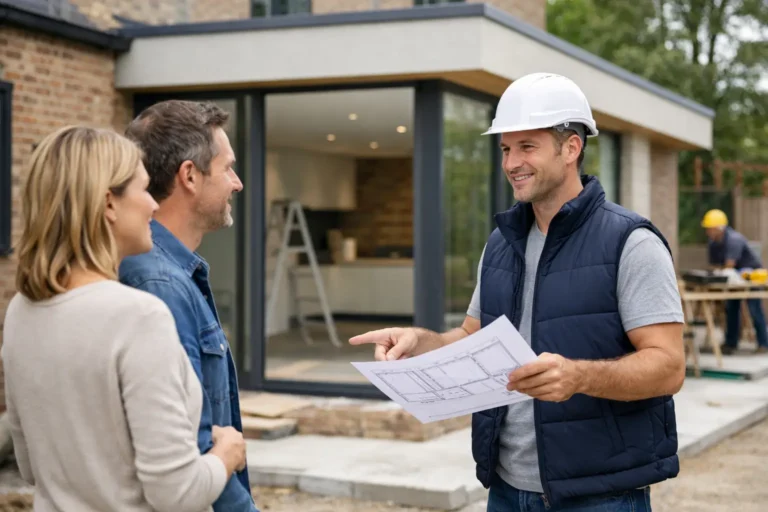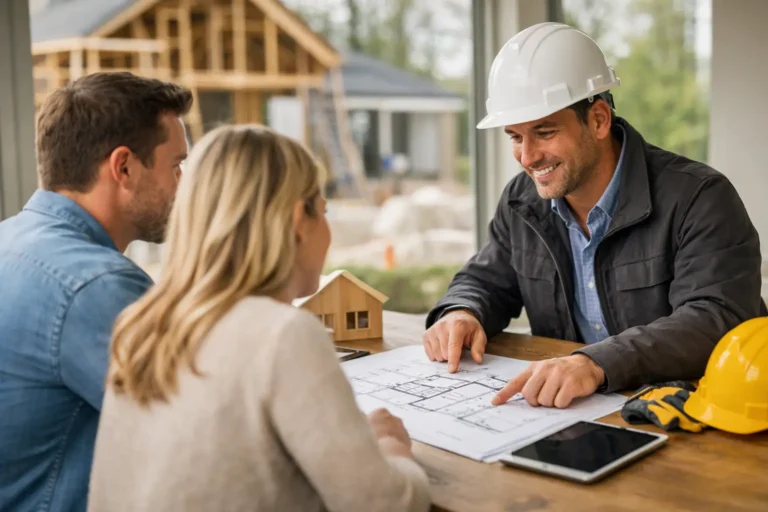
The wrong question at the start of a build can cost you months later. Most homeowners focus on finishes, floorplans and price first, but what to ask a builder before building goes much deeper than that. The early conversations are where you find out whether a builder is genuinely reliable, properly licensed, clear on costs, and realistic about your project.
If you’re planning a new home, extension, renovation or townhouse project, the aim is not to turn the first meeting into an interrogation. It’s to understand how the builder works, how transparent they are, and whether they are the right fit for your family, budget and site. A good builder should be comfortable answering thoughtful questions clearly and without dodging the hard parts.
What to ask a builder before building your home
One of the first things to ask is whether the builder is licensed and insured for the type of work you want done. That sounds obvious, but it matters more than many people realise. A builder may be experienced in one area and less suited to another. A company that is strong in new homes may not always be the best fit for a complex extension on an older house, where hidden structural issues and tying old work into new can quickly change the scope.
You should also ask who will actually manage your project day to day. In some businesses, the person who wins the job is not the person you deal with once work starts. That is not automatically a problem, but it helps to know whether you will be speaking with the builder directly, a site supervisor, or an office-based project manager. Clear lines of communication make a real difference when decisions need to be made quickly.
Past work is another area worth exploring properly. Rather than just asking to see polished photos, ask about projects that are similar to yours in budget, size and complexity. A builder’s experience with sloping blocks, tight suburban sites, heritage-style homes, or multi-unit developments can shape the outcome more than a glossy gallery ever will.
Questions about pricing, allowances and variations
Price matters, but the cheapest quote is rarely the full story. One of the most important questions to ask a builder before building is how detailed the quote is and what has been left out. Many disputes begin because an owner assumed something was included when it was only an allowance, or not covered at all.
Ask whether the price is fixed, what provisional sums have been included, and how prime cost items are handled. These terms can sound technical, but they affect your final spend. If a quote includes low allowances for things like tiles, tapware or appliances, it may look competitive upfront while setting you up for extra costs later.
It is also worth asking how variations are priced and approved. Changes happen on many builds. Sometimes they come from the owner, sometimes from site conditions, and sometimes from council or engineering requirements. The key issue is process. You want to know whether variations are documented in writing, costed before the work proceeds, and explained clearly enough for you to make a sensible decision.
A transparent builder will also talk honestly about what can push costs up. Soil conditions, service connections, demolition surprises, drainage issues and planning requirements can all affect price. There is no builder who can promise that every unknown disappears, but a good one will explain the likely risk areas before you sign.
Ask about timeline – and what affects it
Every owner wants to know how long the project will take, and fair enough. But the better question is not just, “How long will it take?” It is, “What could delay it, and how do you manage those delays?”
A realistic timeline is more valuable than an optimistic one. Weather, material lead times, permit approvals, client selections and site access can all affect progress. If you are building or renovating in established parts of Melbourne’s north, site constraints and local council processes can also have an impact depending on the suburb and the nature of the work.
Ask the builder when construction can genuinely start, not just when they would like it to start. There can be a gap between signing a contract and breaking ground, especially if there are drawings to finalise, permits to secure or engineering details still being resolved.
It also helps to ask how the schedule is communicated during the project. Some builders provide regular updates and milestones, while others are more informal. Neither approach is automatically wrong, but you should know what to expect. Families living through an extension or renovation, in particular, need clarity around key stages, access, services and disruption.
Questions about contracts and approvals
Before committing, ask what contract will be used and how the builder explains it. A proper building contract should set out payment stages, inclusions, exclusions, timeframes, responsibilities and the variation process. If anything feels vague, ask for it to be clarified before signing, not after work begins.
You should also ask who is responsible for permits, engineering, soil tests and council documentation. Some builders offer a more complete design-and-build service, while others expect the client to manage parts of the pre-construction process through separate consultants. There is no single right model, but there does need to be a clear division of responsibility.
This is especially important for extensions, renovations and townhouse developments, where planning and compliance can become more involved. Overlooking one approval at the start can create costly delays later. A capable builder should be able to explain the approval pathway in plain language and flag any likely pressure points.
What to ask a builder before building if you want less stress
A smooth project is not just about construction skill. It also comes down to communication, decision-making and trust. Ask how often you will receive updates, who to contact if there is an issue, and how quickly questions are usually answered. If you are the sort of client who likes regular check-ins, that is worth discussing early.
You should also ask what decisions need to be made before the build starts. Delays often happen because selections are left too late. If you have not chosen bricks, tiles, fixtures or colours by the time they are needed, the programme can slow down while everyone waits.
Another useful question is how the builder handles problems when they arise. Every project has challenges. The difference between a stressful build and a manageable one is often whether the issue is identified early, explained properly and addressed with a practical solution. Builders with strong systems and honest communication tend to keep small issues from becoming big ones.
Ask about site safety, workmanship and aftercare
For families, site safety is not a minor issue. Ask how the site is managed, especially if you will be living in the home during works or visiting regularly. Fencing, access control, rubbish management and safe work practices all matter.
Workmanship is equally important. Ask what quality checks are carried out during the build and at handover. It is reasonable to want to know how defects are handled, what warranties apply, and what support is available after completion. A builder who stands behind their work should be willing to explain this clearly.
This is where a family-owned builder can often bring real value. When a business is built on reputation and repeat relationships, there is usually a stronger focus on doing things properly and being available after the job is done. At SLK Homes, that commitment matters because families are not just building structures – they are building the places where life happens.
The questions that tell you the most
Some of the best questions are the simplest ones. Ask what the builder thinks is the biggest risk in your project. Ask what they would change about your plans before construction starts. Ask what commonly catches clients out on jobs like yours.
The answers will tell you a lot. A builder who only tells you what you want to hear may be easy to like in the first meeting, but not so easy to deal with when things get complicated. A builder who is honest about risks, realistic about budget and clear about process is usually giving you something more valuable than a sales pitch.
Building is a big decision, and the right questions help protect more than your money. They protect your time, your peace of mind and the quality of the home you end up with. If a builder welcomes those questions and answers them with clarity, that is usually a very good sign.