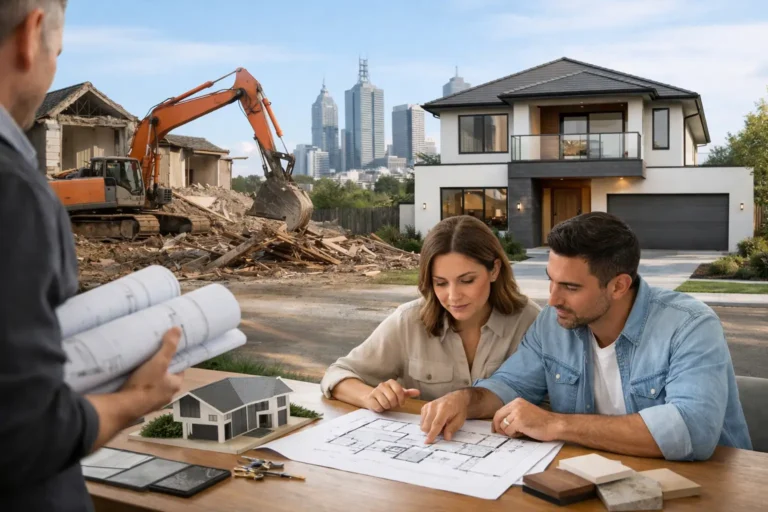
When a house no longer suits the way your family lives, but the block is still right, moving is not always the smartest option. That is usually the point where a knockdown rebuild builder Melbourne homeowners trust starts to make more sense than another renovation, another compromise, or another year spent trying to make an outdated floorplan work.
For many families, the appeal is simple. You keep the location you already know, avoid the hassle of buying elsewhere, and get a home designed for how you live now – not how someone lived 40 or 50 years ago. But a knockdown rebuild is still a major project. The builder you choose will shape the experience just as much as the finished home.
Why a knockdown rebuild can be the better move
A renovation can be the right answer when the structure is sound and the layout only needs modest improvement. But if the home has serious design limits, ageing services, poor energy performance or hidden structural issues, renovating can become expensive without delivering the result you really want.
A rebuild gives you a clean start. You can design for open-plan living, better natural light, modern insulation, improved storage, more bedrooms, or a proper home office. For growing families, that often means spending money once on the right outcome instead of patching the old house in stages.
There is also a financial side to consider. In established Melbourne suburbs, land often carries more value than the dwelling sitting on it. If the block is in a good street, near schools, transport or family support, rebuilding can protect that location value while improving day-to-day comfort and long-term resale appeal.
What a good knockdown rebuild builder Melbourne should handle
Not every builder is suited to this type of work. A rebuild is not just a new home on an empty estate lot. It involves demolition, planning checks, site constraints, neighbourhood character, service disconnections, permits and access considerations that can vary significantly from one suburb to the next.
A capable builder should guide you through the entire process, not just the construction phase. That includes reviewing the site, explaining whether your block is suitable, identifying likely council or planning issues, coordinating demolition, preparing documentation, and then building the new home to the agreed scope and timeframe.
This matters even more in established northern Melbourne areas where blocks can be narrow, sloping, irregular or affected by overlays. A builder with practical local experience is better placed to spot issues early rather than letting them become expensive surprises halfway through the job.
Start with the block, not the floorplan
Many homeowners fall in love with a design before confirming what the site can actually support. That is backwards. The block should always lead the conversation.
Setbacks, orientation, crossover position, easements, soil conditions and any planning controls all influence what can be built. On some sites, a design that looks ideal online may need substantial changes to fit properly. On others, a thoughtful redesign can unlock a much better result than a standard plan ever could.
This is one reason custom thinking matters. The best outcome is not always the biggest house. It is the home that makes the most of your land, budget and lifestyle. Sometimes that means prioritising backyard space for children. Sometimes it means a ground-floor bedroom for ageing parents. Sometimes it means future-proofing with better accessibility and energy efficiency.
Questions worth asking before you sign
A builder does not need to give flashy promises to be the right choice. In fact, families are usually better served by clear answers than polished sales talk.
Ask how the builder manages demolition and approvals. Ask what is included in the base scope and what usually falls outside it. Ask who you will deal with once the contract is signed. Ask how variations are handled and what causes delays most often. A trustworthy builder will answer directly, explain the process in plain language and be upfront about the parts that depend on site conditions or authority approvals.
It is also worth asking about experience with occupied suburbs rather than only greenfield projects. Rebuilds often involve tighter access, neighbour considerations and more detailed site logistics. A builder who understands that environment is less likely to be caught out.
Cost matters, but so does what the price includes
Everyone wants a fair price. That is sensible. But with knockdown rebuilds, the cheapest figure on paper is not always the most affordable outcome.
A lower quote may exclude demolition, site costs, service upgrades, permit-related items or finish selections that most families would reasonably expect. By contrast, a more transparent proposal can appear dearer at first glance while actually reducing the risk of budget blowouts later.
This is where honest scoping matters. You want to know what is fixed, what is estimated and what could change after soil tests, engineering or authority requirements are confirmed. The more clearly that is laid out from the beginning, the easier it is to make a sound decision.
For investors and dual-occupancy landowners, the same principle applies. Yield matters, but so do construction quality, hold costs and delivery reliability. A project that drags on or is poorly specified can quickly erode the margin you expected.
Design for the next 10 years, not just move-in day
A rebuild is a rare opportunity to get the fundamentals right. Families often focus on finishes first – tiles, tapware, colours – but the real value usually sits in the layout.
Think carefully about how the household will change. Will children need separate study zones in a few years? Will a second living area reduce day-to-day stress? Do you need more storage than you think? Would a guest room also serve as a home office? Good design makes daily life easier long after the excitement of handover has passed.
Energy efficiency is also worth serious attention. Better orientation, insulation, glazing and ventilation can improve comfort and reduce running costs for years. These decisions may not be as visible as benchtops or splashbacks, but they shape how the home performs every day.
The value of clear communication during a rebuild
Most clients are not builders, nor should they need to be. What they do need is confidence that the process is organised, transparent and properly managed.
Good communication is one of the clearest signs of a dependable builder. That means realistic timelines, prompt updates, straightforward explanations and no unnecessary jargon. It also means being honest when something changes. Delays can happen in building, particularly when approvals, weather or supply issues affect the program. What matters is how those issues are handled and communicated.
Family-owned builders often stand out here because the relationship tends to be more personal. You are not just another file moving through a volume system. When a builder takes real ownership of the outcome, clients usually feel that difference from the first meeting through to completion.
Red flags homeowners should not ignore
If a builder avoids detail, rushes the contract stage or cannot clearly explain inclusions, treat that as a warning sign. The same goes for vague allowances, poor responsiveness or pressure to commit before proper site and planning checks are done.
Another red flag is a design process that ignores the realities of the land. A house that looks impressive in a brochure means very little if it does not suit the block, the budget or the way your family actually lives.
You should also be cautious of promises that sound too neat. Fast approvals, unusually low site costs and very short build times may be possible in some cases, but they should always be backed by real explanation. Building confidence should come from clarity, not sales pressure.
A rebuild should feel like a step forward
A well-managed knockdown rebuild is about more than replacing an old house. It is a chance to create a home that suits your family, your block and your long-term plans without giving up the neighbourhood you value.
For homeowners across Melbourne’s north, that often means staying close to schools, work, parks and the community ties already built over time. With the right builder, the process feels structured rather than overwhelming, and the result is not just a new home, but a better fit for the life you are building.
If you are weighing up whether to renovate, move or start again, take the time to assess the block, the budget and the builder with equal care. The right decision is rarely the one with the loudest sales pitch. It is the one that gives your family confidence from the ground up.